Computational Modeling of Rail-Induced Vibrations
A Predictive Framework for Building Response
A coupled simulation framework for tracing vibration from a moving train through the track and ground into a nearby building.
Problem
Train vibration travels from the wheel–rail contact through the ground and into nearby buildings. Animated pulses make those transmission paths easier to see.
Moving pulses show vibration reaching the building.
Design
A track–ground–building model captures the path from wheel–rail interaction to structural response.
Modal Analysis
After extracting its natural frequencies and mode shapes, I brought the flexible-rail model into SAMS2000 to simulate dynamic wheel–rail motion as the train ran along the track.
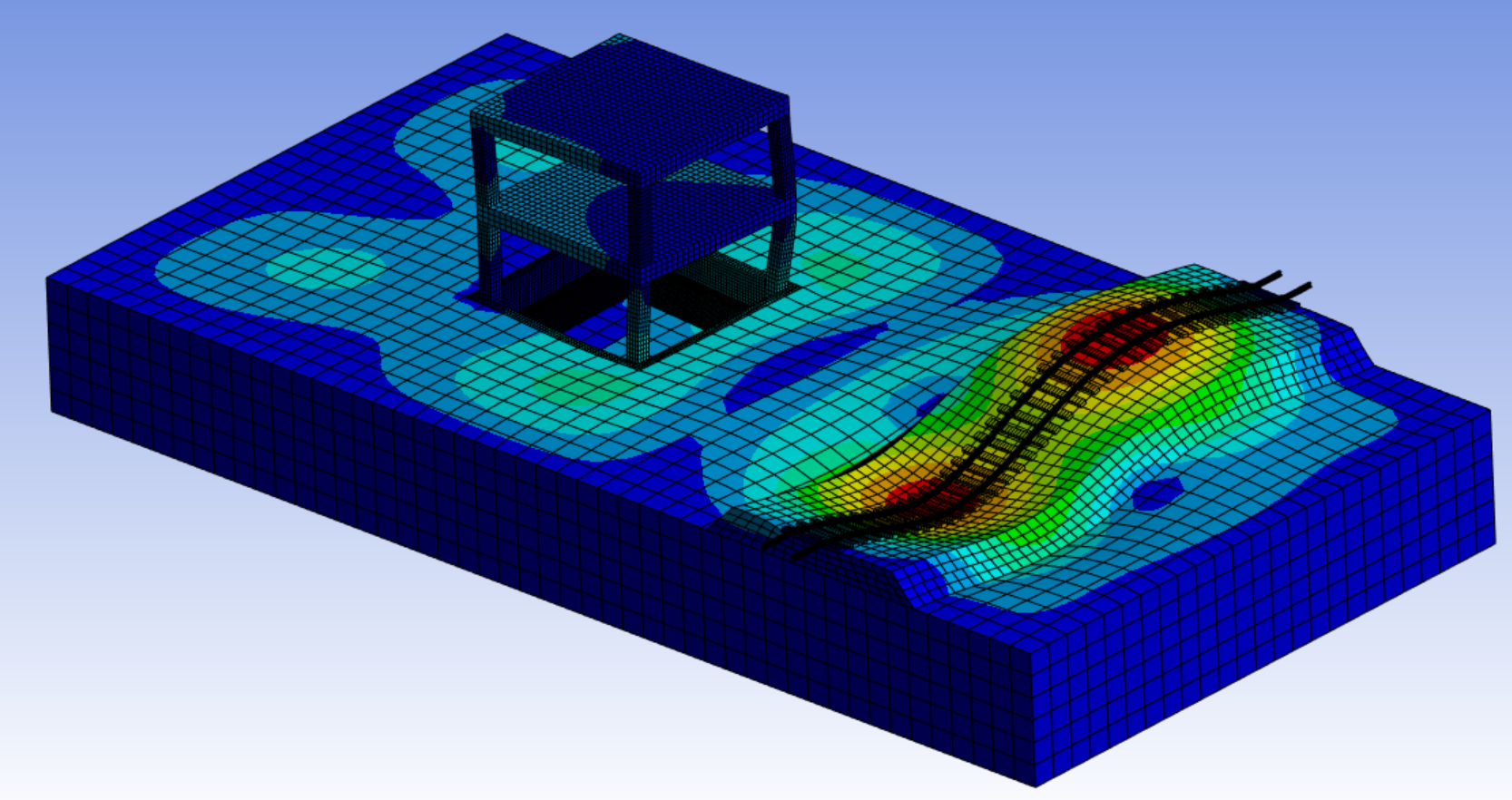
Keep the motion that matters
ANSYS modal analysis provides a compact basis for representing structural motion without solving every physical degree of freedom at each time step.
Multibody Dynamics
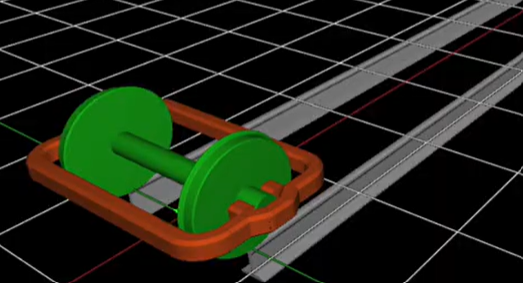
Flexible-body dynamics adds the moving wheelset and wheel–rail contact to the structural model.
In SAMS/2000, a suspended wheelset traverses the flexible rail. The solver calculates time-dependent modal response from the moving contact, which MATLAB later maps back to physical nodes.
Findings
The reconstructed response shows rail-induced vibration reaching the building. Its possible effect on occupant comfort, assessed against ISO guidance, warrants further investigation and mitigation.
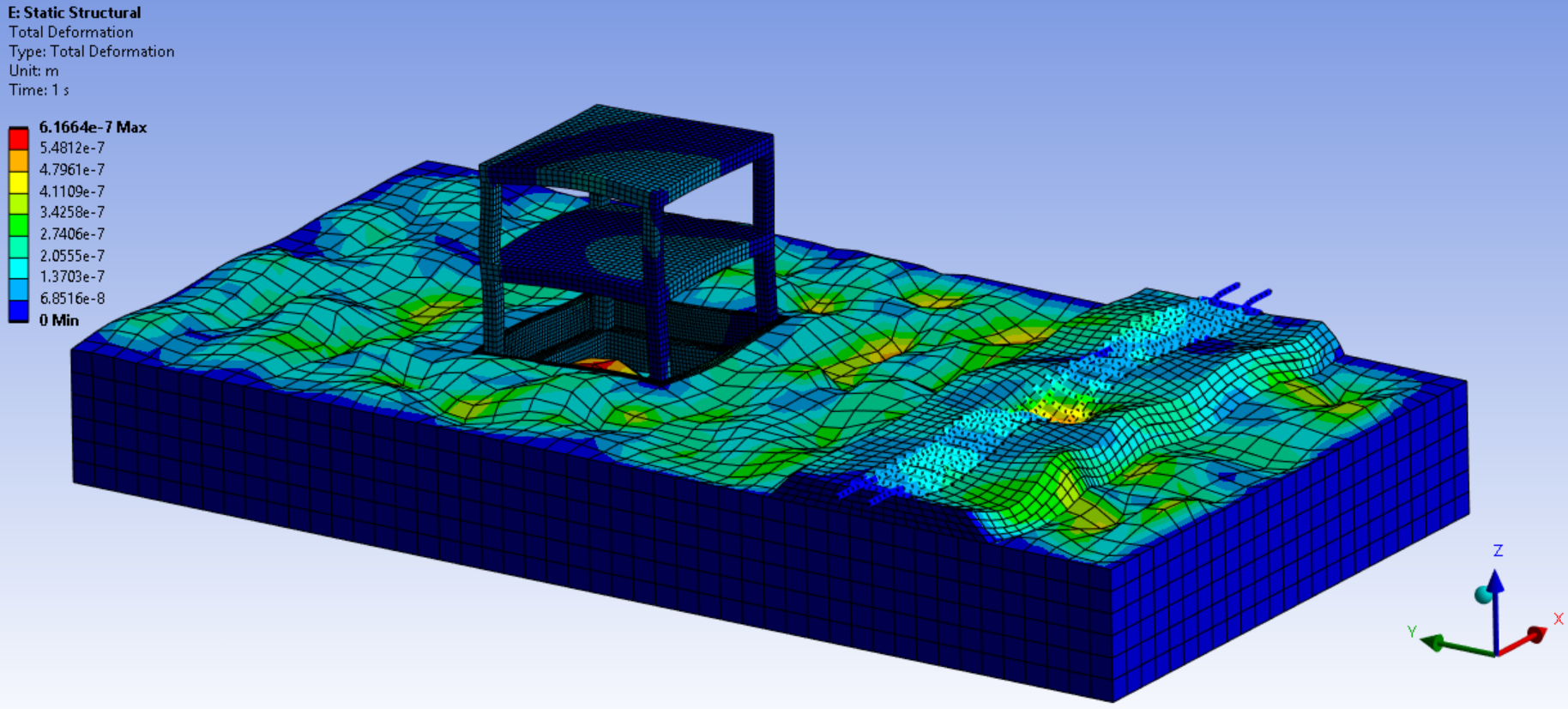
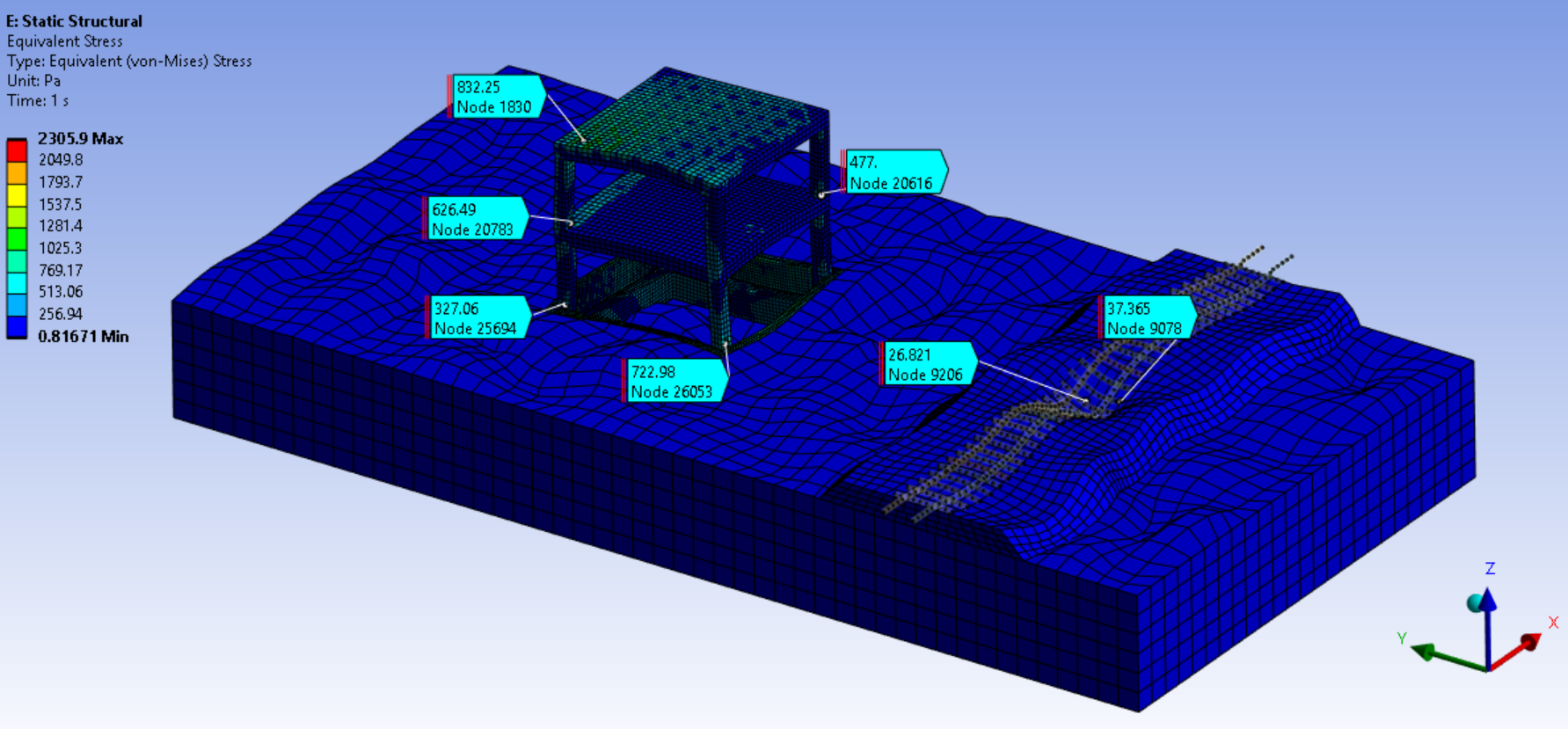
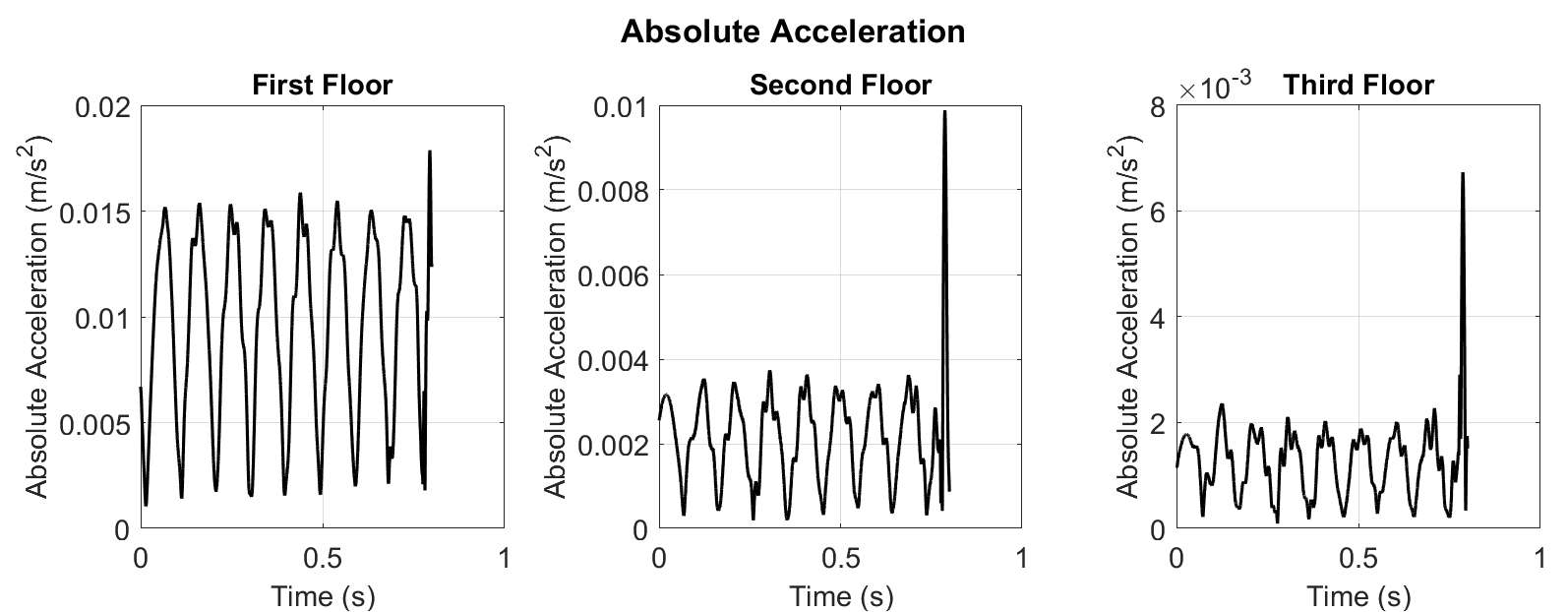
The modeled first-floor RMS acceleration was 0.0106 m/s², just above the thesis’s 0.01 m/s² perceptibility reference; response decreased on the upper floors.
Built a computational framework to trace rail vibration through the track–ground–building system and guide further investigation and mitigation for occupant comfort.